
Accessible bathrooms are all about making everyday life easier and safer for people with limited mobility, including older users. You’ll often find them in places like care homes, but they can be installed in all sorts of settings. Designed with comfort and practicality in mind, they’re fully accessible, easy to use, and built to support independence.
This article will show you how to create a safe and accessible bathroom for your care home that will last for years to come.
What are Accessible Bathrooms?
Accessible bathrooms, also known as disabled bathrooms or accessibility bathrooms, help people with mobility challenges, such as those who struggle to get in and out of showers and bathtubs or to use the toilet.
The enhanced safety features and easy access found in all accessible bathrooms make them ideal for today’s care homes. With their wider doorways, level-access showers, grab rails and open-plan design for wheelchair movement, accessible bathrooms offer both independence and comfort to all users.
From user-friendly taps and toilets to easy-access wetrooms, here’s how you can install an accessibility bathroom in a care home.
Do Regulations Apply to Accessible Bathrooms in Care Homes?
Yes, guidance on accessible toilet design is mainly set out in Building Regulations Approved Document M and British Standard BS 8300. These outline recommended layouts, dimensions, fittings, and the space needed to move around safely and comfortably.
Whether a building meets these standards is usually checked by building control during the design, build, or refurbishment stages. The specific requirements can vary depending on the type, size and purpose of the building.
How Do You Create Accessible Bathrooms in a Care Home?
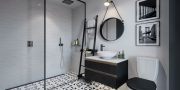
Designing a bespoke, disability-friendly bathroom doesn’t mean compromising on style. From sleek walk-in showers to modern, discreet grab rails, there are plenty of ways to create an accessible bathroom that feels fresh, contemporary and even a little luxurious.
Whether it’s disabled bathrooms or accessible bathrooms that you’re looking for, here’s everything you need to know.
1. Inspect the Floor Plan
A fully accessible bathroom begins with an appropriate floor plan. All fixtures and fittings should be thoughtfully laid out to make the most of the space available.
With smart, well-designed features and attention to the layout, accessibility bathrooms make everyday routines easier to manage for all users.
2. Walk-in Showers and Baths
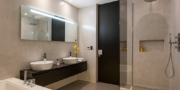
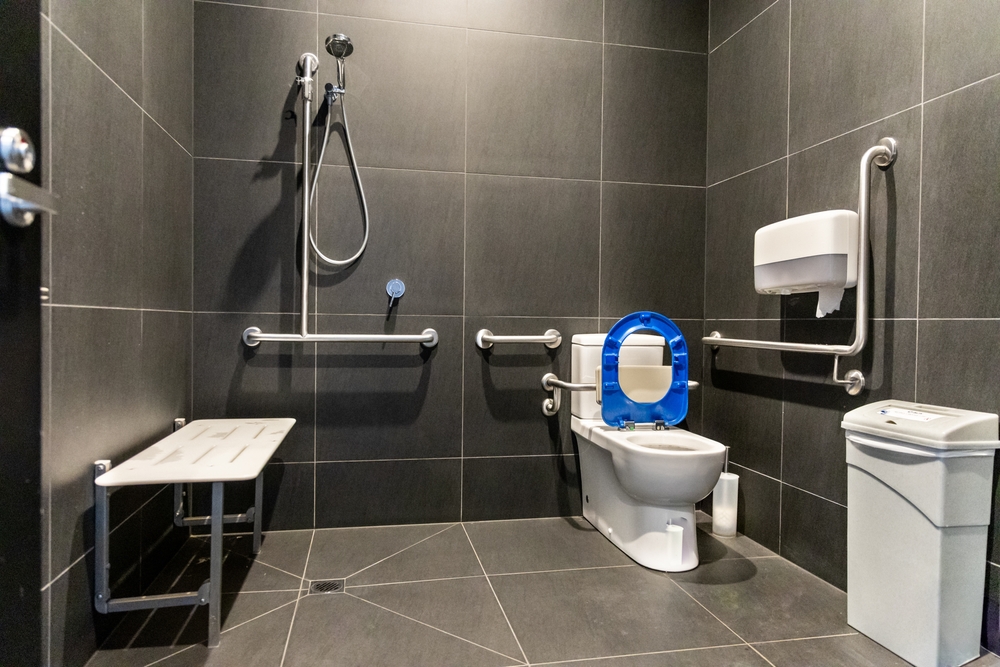
Walk-in showers and wetrooms are a key feature of accessible bathrooms. These level-access, doorless shower enclosures eliminate the need to step over high trays, reducing the chances of slips, trips and falls.
Wetrooms and walk-in showers are perfect for wheelchair users, those with limited mobility, or anyone who struggles with balance. Their open-plan, seamless design not only looks modern but also makes cleaning much easier.
Also, making your bathroom accessible doesn’t mean you have to give up having a bath. If bathing is a priority, there’s no reason to miss out. Walk-in baths can be a practical and comfortable addition to a disabled bathroom.
3. Effective Drainage
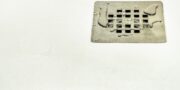
Good drainage is essential in an accessible bathroom because it prevents water from pooling on the floor, which can create slip hazards. Residents in care homes often have limited mobility or balance issues, so even a small amount of standing water can increase the risk of accidents.
Modern wetroom drains ensure water flows quickly away from showers, sinks and other wet areas, keeping the floor safe and dry. This is particularly important in wetrooms or walk-in showers to stop water from spreading across the floor.
In addition to safety, proper drainage helps maintain hygiene and reduce maintenance. Standing water can encourage mould, bacteria, and unpleasant odours, which can compromise the health of residents and make the bathroom harder to clean. By incorporating effective drainage systems, care homes can ensure that accessible bathrooms remain clean and easy to maintain, creating a safer and more comfortable environment.
4. Shower Seats
Shower seats provide a safe and comfortable place to sit while users are showering, helping to reduce the risk of slips and accidents. They come in fold-down wall-mounted models or freestanding versions with non-slip feet, depending on your bathroom layout and needs.
Shower seats are especially helpful for anyone who tires easily, struggles to stand for long periods or is recovering from surgery. For optimal safety, they should be securely installed to support your weight and, ideally, used alongside grab rails for extra stability.
5. Grab Rails
Grab rails are an essential feature in any accessible bathroom, providing safety, stability, and independence. They also come in a variety of styles and designs to match any theme.
Opting for a sturdy grab rail combines functionality with modern elegance, keeping your bathroom safe. For a more contemporary look, matte black grab rails are a stylish alternative. Using multiple rails in the same finish creates a sense of continuity, turning grab rails from a purely practical feature into a design statement.
6. Non-slip flooring
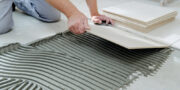
Non-slip flooring is a common feature in accessible bathrooms in care home settings. Many residents have limited mobility or use walking aids, which makes wet bathroom floors particularly hazardous. Non-slip surfaces provide better grip underfoot, even when the floor is wet, helping residents move safely and independently.
Beyond safety, non-slip flooring also offers confidence and comfort for residents. In a care home environment, durable non-slip flooring also helps maintain hygiene and withstands heavy foot traffic, making it both a practical and essential choice for accessible bathroom design.
7. Easy-access Toilets
Disabled bathrooms greatly benefit from user-friendly toilets that are fully accessible, whatever your needs.
If getting on and off the toilet is difficult and you often find yourself reaching for the grab rail, a toilet support rail could make things much easier. A fold-up support rail with an adjustable leg is a practical choice, as it provides stability when you need it and can be neatly folded away when you don’t. This helps free up floor space and makes moving around the bathroom simpler.
A smart toilet can also improve day-to-day comfort, thanks to features designed to make using the bathroom easier and more hygienic. Similarly, comfort-height toilets offer another practical solution and come in a range of heights suited to individual needs.
8. Accessible Bathroom Basins
Bathroom basins can be tricky to move around, especially when pipes or storage units get in the way. While there are clever ways to hide bathroom pipes, choosing an accessible basin or washstand helps free up floor space and makes the area much easier to use for care home residents and those with restricted mobility.
Accessible basins are often wall-hung, which means they can be fitted at a height that suits the user, creating a clean, open feel. Wall-hung basins also give your bathroom a modern, sophisticated look, and contemporary designs can completely move away from the traditional “clinical” style often associated with accessible bathrooms.
If a sleek, modern look isn’t your thing, there are also wall-hung basins with more traditional designs. Alternatively, a comfort-height pedestal basin can be a great option if you want to achieve a traditional look while still improving ease of use.
9. Accessible Taps
For some care home residents, standard taps can be challenging to use. While there are plenty of accessible options, they can sometimes feel too clinical for this type of bathroom. If grip is an issue, lever taps are a much easier alternative, as they’re simple to operate without twisting or squeezing.
If you’re seeking a modern look, sensor taps are usually battery-operated and remove the need for handles altogether, delivering water at a safe, consistent temperature. They’re also a more hygienic option, making everyday use easier and cleaner.
What are the Benefits of Care Home Accessibility Bathrooms?
Accessibility bathrooms offer similar style and functionality as traditional bathrooms while ensuring 100% ease of use for the disabled and mobility-restricted. This can greatly improve user experience in care home settings. The benefits include:
- Contemporary & Practical: Create a streamlined, modern bathroom that improves independence for people with limited mobility.
- Ease of Access: Level floors and wide layouts eliminate trip hazards, unlike traditional shower trays.
- Larger Shower Area: Wetroom and walk-in showers are not limited by a standard shower tray; glass screens can separate the shower area.
- Flexible Installation: Can be fitted anywhere in the home, including upstairs, with tailored drainage for timber or concrete floors.
- Low Maintenance: Easy to clean and requires minimal upkeep.
- Durable: Properly installed wet rooms last for the lifetime of the tiles.
- Customisable: Can be designed to meet individual needs, with additional features to aid use.
Need Help Designing Your Accessible Bathrooms?
Our wetroom design services offer a range of accessible bathroom solutions for all kinds of commercial and domestic settings. Get in touch to discuss your next project.